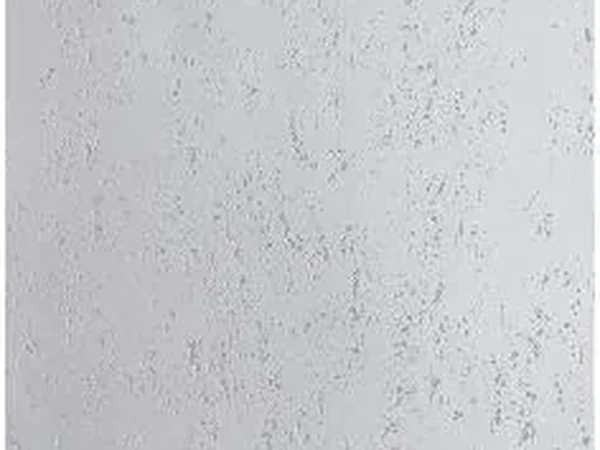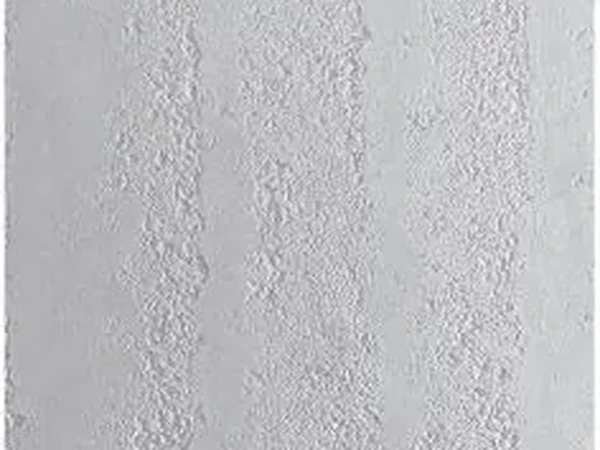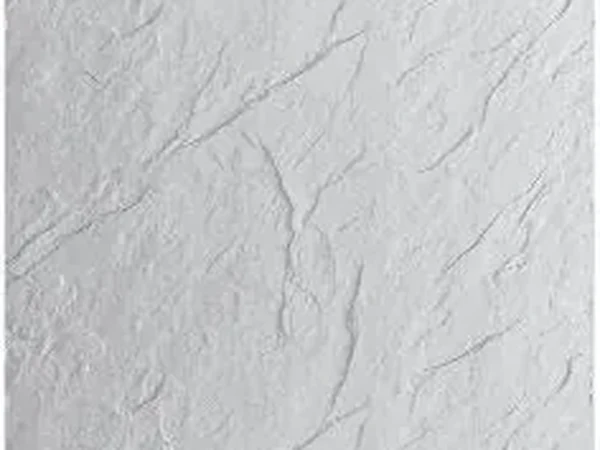
Start with what “flexible stone” means
Before comparing materials, define the product. “Flexible stone” is a market category that can include natural-stone-faced sheets and engineered mineral-composite surfaces. Conventional natural stone usually refers to rigid quarried stone pieces, tiles or slabs. Those are not equivalent constructions.
For a fair comparison, evaluate the exact flexible product against the exact natural stone format being considered for the same wall or feature.
Side-by-side project comparison
| Decision point | Flexible surface system | Conventional natural stone |
|---|---|---|
| Geometry | Can suit many curved and shaped wall conditions, depending on family and radius. | Rigid; curved work usually needs segmentation, machining or specialist fabrication. |
| Build-up | Thin decorative finish; exact thickness varies by family. | Typically much thicker, especially for slab or masonry-style applications. |
| Handling | Lower bulk can simplify moving sheets through fit-out spaces. | Heavier pieces often require more handling planning. |
| Material authenticity | Depends on construction; some are natural-stone-faced, others engineered. | Quarried natural stone throughout the piece. |
| Surface variation | Varies by product and manufacturing method. | Geological variation is intrinsic and often part of the specification. |
| Installation | Usually a thin bonded finish over a prepared substrate. | May use adhesive, anchors, mechanical support or other stone-specific systems. |
| Best fit | Curves, low build-up, feature walls and selected renovation overlays. | Projects where stone depth, mass, heritage authenticity or conventional stone detailing are priorities. |
Curves are where the difference becomes obvious
A rigid slab cannot simply bend around a column. Curved natural-stone work can still be achieved, but the fabrication route changes: smaller units, radial cuts, segmented pieces, carved stone or specialist fabrication may be required.
A flexible surface can sometimes follow the prepared geometry directly. That does not eliminate detailing—radius, seams, backing and adhesive still need review—but it can reduce the amount of rigid fabrication.
Renovation: compare the whole assembly
In renovation, added depth, handling, downtime and the condition of the existing wall can matter more than the visual finish alone. Thin flexible surfaces can be attractive when demolition is undesirable and the existing substrate can be made suitable for bonding.
Material authenticity is a separate decision
If the brief specifically requires quarried natural stone, an engineered stone-look sheet is not a substitute simply because it photographs similarly. Conversely, if the design intent is a stone aesthetic on a curved or lightweight feature, a thin engineered surface may satisfy the visual and geometric requirements more efficiently.
Installation routes are fundamentally different
Flexible surfaces are commonly treated as bonded finishes over a prepared base. Conventional natural stone may involve a more substantial support strategy depending on format and location. That affects sequencing, labor, transport, substrate design and interfaces with adjacent materials.
How to choose for a real project
- Choose the flexible route when curves, low build-up, handling and renovation constraints are primary.
- Choose conventional natural stone when material authenticity, full stone depth, heritage requirements or traditional stone detailing are primary.
- Mock up both when the visual requirement is high and the decision is not obvious from drawings.
Frequently asked questions
Is flexible stone cheaper than natural stone?
There is no reliable category-wide answer. Material, fabrication, transport, substrate preparation and labor all affect installed cost. Compare the complete project system.
Does flexible stone look exactly like natural stone?
That depends on construction. Natural-stone-faced products preserve a genuine stone surface; engineered products reproduce a stone aesthetic. Review physical samples rather than relying only on photos.
Which is better for curved walls?
A flexible surface is often easier to adapt to curves, but the exact radius and finish must be verified. Conventional natural stone can also be used on curves through specialist fabrication.
Turn the guide into a material shortlist.
Browse Lithvanta surface families, request physical samples, or send the project geometry and finish direction for a quotation.
Sources & further reading
Editorial note: Lithvanta uses AI-assisted research and drafting as part of its content workflow. Product facts are checked against current catalog data where available. Material-specific claims, test reports, exposure limits and installation systems should be confirmed for the exact family before specification. Read our editorial policy.