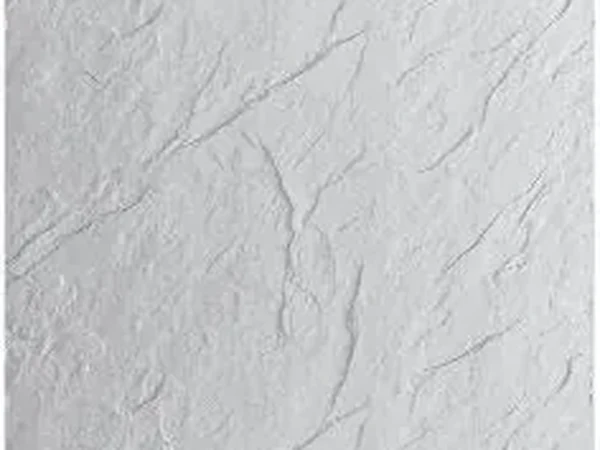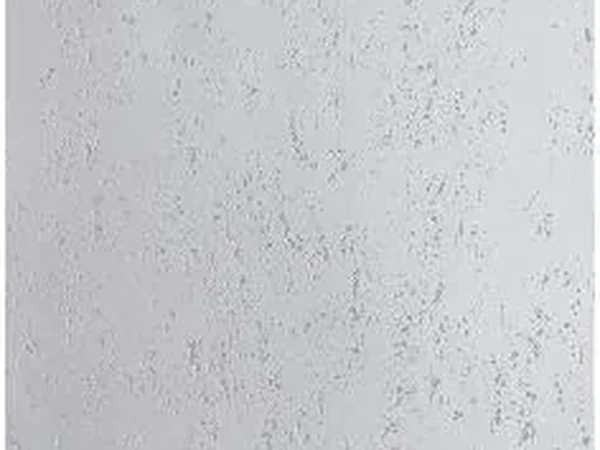
First define what “flexible travertine” means
In the market, “flexible travertine” can describe different constructions: a natural-stone-faced flexible veneer, an engineered mineral surface with travertine texture, or another thin decorative panel. The specification should identify the exact construction rather than relying on the marketing term alone.
Lithvanta’s catalog contains travertine-directed and 3D-printed stone surface families. The exact construction, format and project suitability should be confirmed at family level.
Match the finish to the curve
Travertine aesthetics often use linear pores, directional bands or horizontal striations. On a curved wall, those visual cues make panel orientation more noticeable than on a flat surface.
- Send the actual radius or diameter.
- Confirm whether the surface is convex, concave or compound.
- Review whether the selected sheet should run vertically or horizontally.
- Check how the texture behaves at the tightest point of the curve.
Control pattern direction before ordering
A travertine finish can look disjointed if neighboring panels rotate the grain or if seams interrupt strong horizontal movement. Before production, decide how the pattern should flow through corners, returns and curved sections.
Use physical samples under project lighting
Warm lighting can make beige travertine appear more golden; cool daylight can emphasize grey or silver tones. A screen image cannot reliably show texture depth, gloss, relief or the way the finish changes when bent.
For a curved feature, first review a hand sample, then use a small radius mock-up if the geometry is prominent or the selected texture is strongly directional.
Plan the installation route as part of design
The substrate, primer, adhesive and seam treatment affect the final look. Curved surfaces need a base that is smooth enough to support the sheet without telegraphing irregularities. Pressure should be applied progressively so the finish follows the curve without trapped voids.
Flexible travertine specification checklist
| Item | Confirm before approval |
|---|---|
| Finish code | Exact family / color / texture reference. |
| Construction | Natural-stone-faced or engineered surface. |
| Radius | Minimum project radius and panel orientation. |
| Panel format | Available sheet size and likely seam layout. |
| Pattern direction | How the travertine movement should flow. |
| Substrate | Material, flatness, moisture condition and preparation. |
| Adhesive / primer | Compatible system for the selected surface and exposure. |
| Sample / mock-up | Approved physical finish and representative radius where needed. |
Browse Lithvanta’s travertine & 3D printed stone family →
Frequently asked questions
Is flexible travertine always real travertine?
No. The term is used for more than one product construction. Confirm whether the selected finish has a natural-stone face or is an engineered travertine-look surface.
Can travertine-look flexible stone wrap a round column?
Many families can follow curved geometry, but the permitted radius varies. Send the actual diameter and selected finish for confirmation.
Should travertine patterns run vertically or horizontally?
There is no universal rule. Choose the orientation that supports the design intent and works with panel size, seams and the curve. Approve it in the mock-up.
Turn the guide into a material shortlist.
Browse Lithvanta surface families, request physical samples, or send the project geometry and finish direction for a quotation.
Sources & further reading
Editorial note: Lithvanta uses AI-assisted research and drafting as part of its content workflow. Product facts are checked against current catalog data where available. Material-specific claims, test reports, exposure limits and installation systems should be confirmed for the exact family before specification. Read our editorial policy.